A green card holder may complete deferred-adjudication supervision in Texas, receive a dismissal, and assume the criminal case can no longer affect immigration status. But the Texas court’s label does not necessarily settle how federal immigration law views the case. For someone in San Antonio, the answer may depend on what they pleaded or admitted, what the judge ordered, and what the final court record shows. The Law Office of J. Joseph Cohen helps people understand why a state-court result and an immigration analysis can differ. This article explains how the federal definition of conviction can apply, which Texas records may be useful, and what issues to discuss when assessing possible deportation or green card consequences. Completing probation or avoiding a final judgment may be important, but neither fact alone answers every immigration question. The case details and documents matter.
Why Texas Deferred Adjudication Can Count as an Immigration Conviction
Texas deferred adjudication generally means a court postpones a finding of guilt and places a person under supervision after a plea or other court proceeding. If the person completes the court’s conditions, the court may dismiss the case without entering a state judgment of conviction. That state-court outcome can be meaningful, but federal immigration law applies its own definition of conviction.
Under the federal Immigration and Nationality Act, a conviction can include a formal judgment of guilt. It can also include a case in which a person pleads guilty or no contest, or admits facts sufficient to establish guilt, and a judge orders a penalty, punishment, or restraint on liberty. As a result, immigration authorities may examine the plea or admission and the conditions imposed—not just whether Texas entered a final judgment.
The plea and court requirements both matter
The specific record is important. A plea, an admission, and a court order imposing supervision or other requirements may be considered together. Probation conditions can include reporting, fees, classes, testing, or other obligations. Whether those facts meet the federal definition depends on the full record and the particular immigration issue; deferred adjudication does not automatically count as a conviction in every case.
For a San Antonio green card holder, it is also important to distinguish Texas criminal procedure from federal immigration law. The label used by a Texas court does not control the federal analysis by itself.
Which Texas Court Documents Should a Green Card Holder Gather?
A background check or proof that supervision ended may leave out the details immigration review requires. In San Antonio, the case may have been handled in a Bexar County court or another Texas court. The court file can help show what happened at each stage, what the person agreed to, and what the judge ordered. A lawyer may want to review certified records where available, rather than rely on a short online docket entry.
Records that may be relevant include:
- The charging instrument and any amended charge.
- Plea papers, written waivers, and available plea-hearing records.
- The deferred-adjudication order and documents describing its conditions.
- Docket entries, judicial findings, and any sentencing or supervision orders.
- Proof of completion, discharge, dismissal, or other final disposition.
- Records of any later change to the charge or court order.
The needed documents can vary with the offense, the court process, and the immigration question. A court clerk may explain how to request records, but a basic docket or dismissal notice may not contain the plea terms and requirements. For a more detailed checklist, see the Texas court records needed for an immigration review.
In Bexar County, as elsewhere in Texas, the court that handled the criminal matter is generally the place to ask about its file and record-request process. If the case involved more than one court or more than one disposition, the records should be considered together. Keeping the full set can help an attorney assess whether the state outcome resolves the immigration concern or whether further analysis is needed.
Why Probation Completion or a Dismissal May Not Settle the Question
Completing deferred-adjudication supervision can be a significant part of a person’s Texas case. It may lead to dismissal under the applicable state procedure. However, the federal immigration review may still focus on the earlier plea or admission and the court-ordered conditions. A dismissal does not necessarily erase those parts of the record or decide whether a federal immigration ground applies.
A green card holder may face different questions depending on whether they are applying for naturalization, seeking an immigration benefit, or responding to removal proceedings. The type of offense, the exact plea, the sentence or conditions, and prior immigration history can all matter. Texas criminal law and federal immigration law are separate systems, and rules may vary by location and may change over time.
If the record raises concern, an attorney may need to examine the underlying plea and the full case history before discussing any possible response. In some situations, a person may ask about post-conviction review for Texas immigration consequences. Whether a remedy is available depends on the facts and applicable law; a later change to a criminal record does not automatically resolve an immigration issue.
A waiver may be another question in some cases, but it is not automatic. Eligibility can depend on the specific immigration ground, offense, prior admissions, qualifying relatives, and supporting evidence. People evaluating that possibility can review which relatives may support a green card holder’s waiver, while recognizing that a lawyer must assess the individual situation.
Frequently Asked Questions
Does a Texas deferred-adjudication dismissal erase the original plea?
Not necessarily. A dismissal may reflect completion of the Texas court’s deferred-adjudication requirements, but the plea or admission and the court’s orders may remain in the case record. Federal immigration law may evaluate those underlying events independently of the state disposition. The result depends on the exact documents and the immigration issue involved, so a dismissal notice alone may not answer the question.
Can a green card holder face removal over an old deferred case?
An old case can be relevant in an immigration review, but age alone does not determine its effect. The offense, plea, court-imposed requirements, final record, and the person’s immigration history may matter. A deferred case does not automatically lead to removal. A qualified immigration attorney can review the criminal file and explain what questions it may raise in a particular matter.
What if the court file is incomplete or difficult to obtain?
The court that handled the case may have procedures for requesting archived or certified records, and the clerk can provide information about those procedures. Other documents, such as a person’s own plea or supervision papers, may also help identify what is missing. If records cannot be located, an attorney can assess what is available and whether additional steps may be appropriate for the immigration review.
Could the case affect a citizenship application as well as removal risk?
Potentially. A criminal record may be relevant to more than one immigration process, and naturalization has its own eligibility requirements and review. A deferred adjudication is not automatically disqualifying, but it should not be assumed irrelevant because the state case was dismissed. The timing, offense, plea, conditions, and complete record can affect how an application is evaluated.
How Law Office of J. Joseph Cohen Can Help
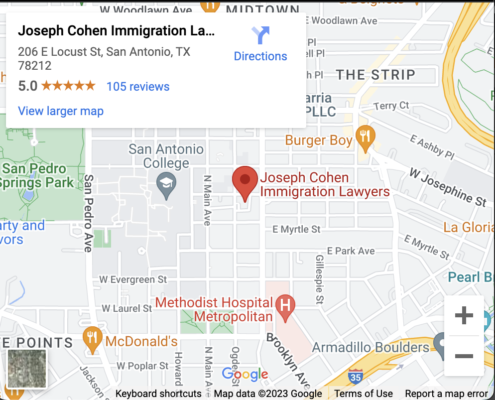
The Law Office of J. Joseph Cohen is dedicated to helping green card holders understand how a Texas criminal record may intersect with federal immigration law. A careful review can include the plea or admission, deferred-adjudication order, supervision requirements, and final disposition—not only the result shown on a background check. For people in San Antonio, reviewing the records from the court that handled the case can help identify the questions that need attention. The firm is committed to fighting for clients’ rights and is ready to evaluate the circumstances and discuss available options. Contact the Law Office of J. Joseph Cohen to request a free consultation or case evaluation.
The information in this article is for educational purposes only and does not constitute legal advice. Contact a qualified attorney authorized to practice in the jurisdiction that applies to your matter for advice specific to your situation.